
They allow users to train with free weights more safely by including features like adjustable safety bars and multiple racking positions. Whether for beginners or advanced lifters, racks and cages support progressive overload while maintaining control and stability throughout every workout
Gym racks are designed to serve as mechanical spotters for heavy barbell training and feature several safety features, such as adjustable safety bars, spotters' arms, and catch mechanisms.
Power racks are used in free-weight barbell exercises as a mechanical spotter and do not restrict bar movement like Smith machines do. As such, they are perfect for providing the lifter with the freedom to move and the stability of the equipment.
Gym racks and cages have a wide range of benefits, including safer, more effective, and versatile training. These machines offer long-term value for any serious training setup.
Power racks are used in heavy barbell lifts like squats, bench presses, and rack pulls to provide the unquestionable stability and support needed to consistently achieve maximum strength. The safety features of power racks are numerous, enabling them to safely lift heavy weights and position them gradually. The frame construction provides a stable environment during training, allowing lifters to be fully engaged in generating force without worrying about the equipment's stability or motion pattern.
In the bench press, spotter arms (bar catches) placed directly over the lifter's chest prevent the bar from crushing the lifter in the event of muscular fatigue or other failure to control the bar. These safety features can be adjusted to ensure solo training is completely safe. Further, allowing lifters to train safely and harder without a training partner.
With a high-quality power rack, you have ample space to add additional facilities such as pull-up bars, storage racks, bands, wall-ball targets, landmine, and more, transforming a single piece of equipment into a full training station. Power racks also provide a place to work on deadlifts by completing rack pulls inside the cage, and allow variations of the exercise that cannot be done with other types of equipment.
An effective home gym power rack has to be high-quality and allow a variety of training styles that promote natural movement patterns to assist in overall strength development, creating progressive overload and systematic strength progress. Gym racks can be used to train in powerlifting, bodybuilding, or functional strength; they provide an organised training platform that delivers the best results for strength development.
The gym racks are professionally welded from heavy-gauge steel, which will retain their integrity throughout decades of use and receive a 5 out of 5 rating for sustainability after 2 years of frequent home gym use. Good construction ensures that your gym rack will be steady, reliable, and safe to use over the years of intensive training, and it is one of the least expensive strength-training investments you can make.
Select the appropriate gym rack based on the quality of construction, safety features, and overall functionality.
Any good gym rack is anchored to a strong steel frame, which is used for both performance and longevity. Premium racks use 11-gauge steel tubing with 3x3-inch or 4x2.5-inch oval tube designs, providing the best strength-to-weight ratio. The steel must be powder-coated, rust-resistant, and able to withstand moisture and frequent use in both commercial and residential settings.
J-hooks are high-precision engineered elements used to hold the barbell in place at various heights, with safety spotter bars serving as a key fail-safe option. Quality racks have laser-cut number mounting points with 1-inch spacing between them to accommodate different exercise angles and user heights. Safety bars can be independently adjusted, so the barbell can be held securely at any height, allowing solo training with confidence in the form and safety of maximal-effort attempts.
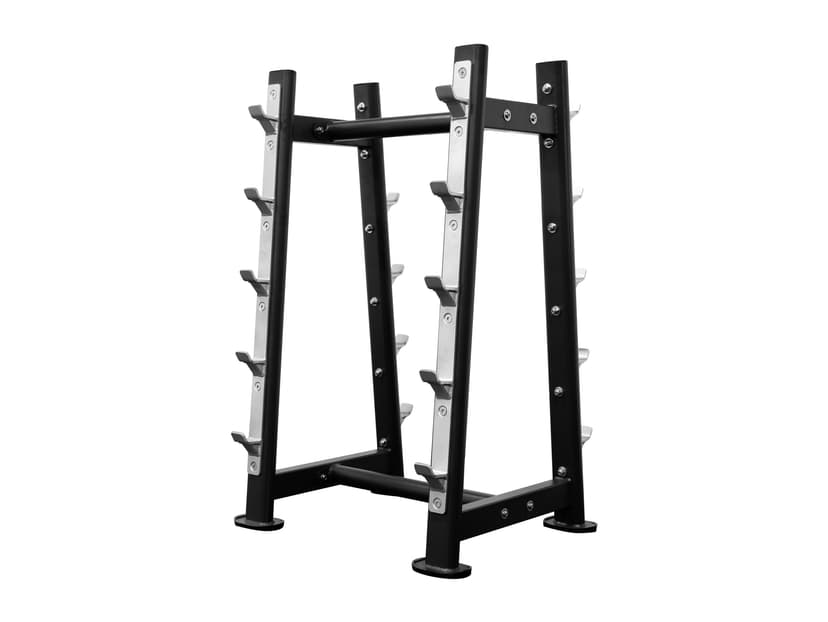
Multi-grip pull-up bars are integrated into a single bar, making them versatile for training and offering different grip widths and positions. Bodyweight, weighted, and resistance-band exercises can be performed with properly designed pull-up bars. Premium racks also have more attachment points for dip bars, band pegs, and specialty accessories like the G236 Pro Barbell Rack, making it a fully equipped, functional training station that will make the most of your investment.
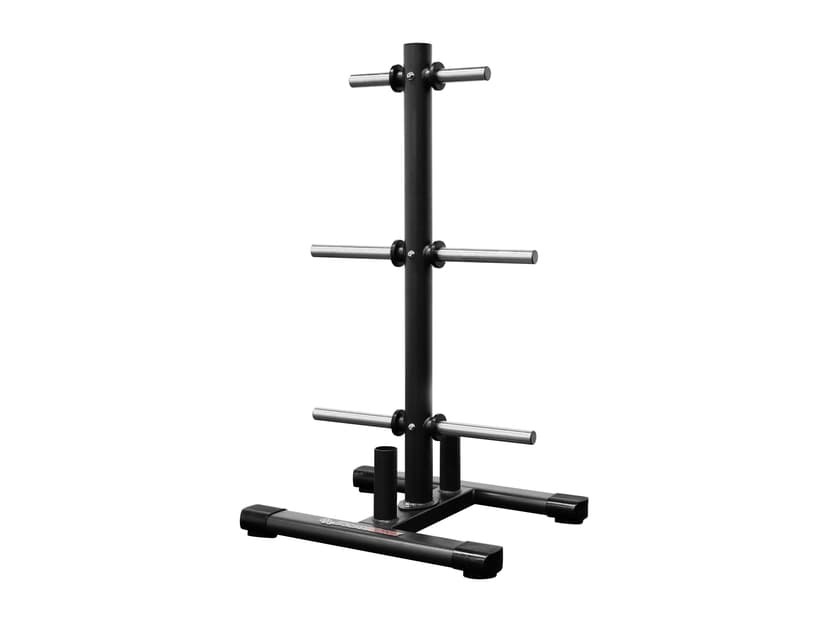
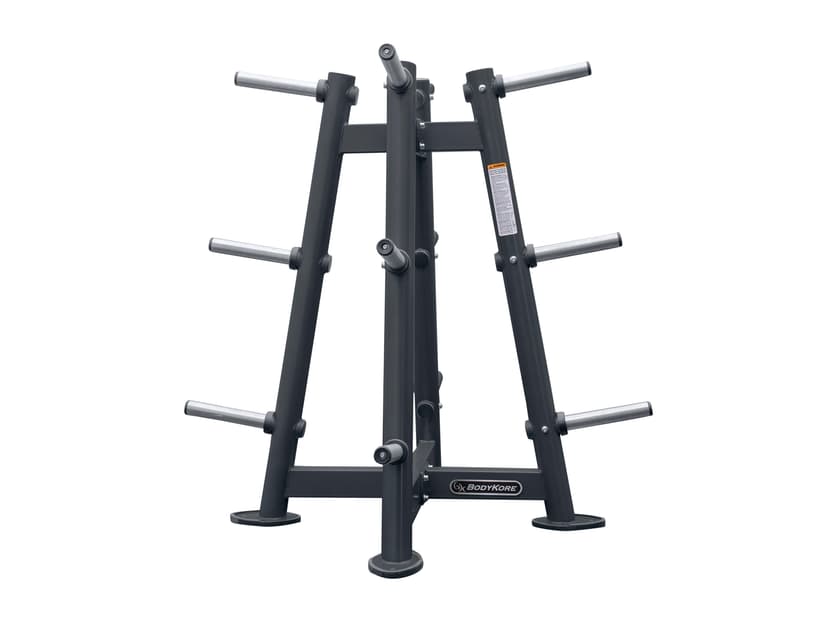
Premium racks have more attachment points that allow you to add a dip bar, band pegs, and speciality attachments, enabling you to turn your training space into a fully functional training station. Quality pegs are placed at ergonomic heights to allow easy loading and unloading during workout transitions, providing efficient training flow and reducing the time required to set up between exercises like the CF2134 Weight Plate Tree or G234 Olympic Weight Tree.
The rack geometry is advanced to improve the quality of movement and exercise mechanics through refined design features. The spotting holes are laser-cut, guarantee that safety bars are laid in the correct location, and the uprights are adequately spaced to ensure that the barbell does not bind or catch during the up-and-down action. A well-structured rack would reduce friction, enhance neuromuscular feedback, and make exercise execution smoother.
The various rack styles are used in different applications in training and space. Knowing the differences will make you choose the appropriate setup to achieve your goals and objectives.
Power racks are fully enclosed, four-sided designs that offer the greatest safety and versatility to serious lifters, like the Foundation Series Full Cage G702. They have uprights on all sides and safety bars that run front to back, providing protection during heavy movements of the compounds. They can be used in isolated training, progressive overloading, and high-intensity training, where safety is the primary concern. Power racks are larger and provide the safest and most stable training environment.
Half racks use two uprights and a single set of safety bars, making them more compact while still meeting safety requirements. They are also a good option for lifters with limited space who still need the security and functionality of a rack. Half racks are usually cheaper than full cages and support most common lifts, but do not provide the complete enclosure of a power rack.
Squat racks like the G236 Pro Barbell Rack are simple constructions consisting of two uprights and J-hooks, designed for squatting. They are very cost-effective, occupy little floor space, and are ideal for lifters whose main training objectives are lower body training. Nevertheless, they do not provide as much safety as power racks and are not as versatile for variations of presses and pull-ups.
Several high-end racks may be attached to the raised platforms or floor systems that mark your training area, providing a good surface for lifting. These systems will provide stability, secure your flooring, and provide a designated workout area. Platform racks are suitable for serious home gyms or commercial facilities that require a professional, ready-to-use solution.
Gym racks nowadays facilitate a wide range of strength training exercises and accommodate both basic and advanced types. With a quality rack system, you can build muscle, strength, and athletic power through various training programs.
The basis of any strength program is lower-body movement only be achieved with adequate rack support.
Barbell Squats: This is the main leg exercise in which the barbell is placed on your shoulders, and you bend and straighten at the knees. The safety bars on the rack were designed to help you if you had a breakdown.
Front Squats: It is a difficult type of squat in which the bar is placed over the front of the deltoids and requires greater core stability and an upright position than back squats.
Rack Pulls and Deadlift: The variations are performed with a high starting point so you can pull more weight and focus on lockout strength.
Lunges: Unilateral leg presses with a barbell on your back enhance leg strength and balance, working the backside of your body through the quadriceps and glutes.
The movements of the upper body build pressing and pulling power, which are critical in sporting activities.
Bench Press: This is a horizontal pressing motion performed on a set of benches inside the rack, focusing on the chest, shoulders, and triceps, with the heavy weight supported safely.
Overhead Press: It is a vertical pressing motion in which you press the barbell overhead, increasing the height of the shoulder and pressing strength.
Barbell Rows: This is a basic pulling exercise that builds the back, lats, and rear shoulders, and the rack lets you rest between sets or even venture into heavy singles without injury.
Pull-Ups: This upper-body strength-building exercise uses the rack and pull-up bar and can be weighted or assisted.
Traditional lifts limit your rack; advanced training methods increase your rack capabilities.
Landmine exercises: Speciality exercises with an angled landmine attachment use a unique path for the bar during explosive training and rotation.
Resistance Band Training: Adding resistance-accommodating bands to the anchor points of the rack lets you increase the difficulty at lockout or decrease it at the beginning of lifts.
Rack-Supported Movements: Exercises such as rack-supported rows, Spanish squats, and pause exercises that use the rack framework to change the degree of challenge or technique in a compound exercise.
Determine Your Training Objectives: Identify if your training objectives are focused on heavy compound training, functional training, or a balanced combination to focus your selection.
Assess Available Space: Determine the size of your training space and whether to buy a full-power cage, a half-rack, or a compact squat rack based on your facility's size.
Take into Account the Weight Capacity: This is to ensure you have sufficient capacity between your current and proposed future strength increases, not to be hampered by equipment constraints.
Improve Safety Designs: Inspect adjustable safety bars and J-hook spacing, and ensure the points of attachment are also secure in accordance with commercial equipment standards.
Inspection Build Quality: Discover 11-gauge steel construction, high-quality welding, laser-cut mounting holes, and professional powder-coated finishes.
Check Attachment Options: Determine the availability of pull-up bars, dip attachments, band pegs, and landmine mounts to supplement all your training requirements.
Bodykore racks and cages are designed for durability, performance, performance and ranking it among the top choices for both home gym and commercial gym
The mainframes of BodyKore racks are constructed from 4x2.5-inch 11-gauge steel oval tubing, manufactured to commercial-grade standards, and can support over 1,000 lbs. All the BodyKore racks are highly engineered and tested to provide precision in welding, laser-cut mounting points, and finishes that meet the highest industry standards. This proves BodyKore's desire towards equipment longevity and customer satisfaction.
BodyKore equipment is commonly used in business fitness centres, college athletic centres, professional training centres, and residential fitness centres worldwide by serious strength athletes. This name is created because the brand has performed well in a high-traffic environment, where equipment reliability directly affects member satisfaction, retention, and training outcomes.
Racks like the G703 Foundation Series include multi-grip pull-up bars, dip bars, band pegs, J-hooks, spotter bars, and landmine attachments with 18 mounting slots, offering maximum training flexibility. This all-inclusive equipment arrangement offers uninterrupted transitions between lower-body (squats, deadlifts) and upper-body press-and-pull workouts, and efficient training variations without equipment restrictions.
The BodyKore power racks are designed with a 3 x 3 x 11-inch gauge mainframe and a 1000 lb weight capacity to provide significant safety margins for both elite-level lifters and under extreme loading conditions. This outstanding strength allows the largest capacity of the heaviest strength athletes and makes your equipment adaptable as your lifting performance becomes more vigorous with years of training.
Each BodyKore rack is constructed to commercial-grade standards, with accurate welding, strong fixed points, and professional finishing that will withstand intensive daily use. BodyKore gear is specifically designed for commercial gym settings and has been tested to meet performance requirements for residential and commercial applications.
What is the difference between a power rack and a half rack?
A power rack is a fully enclosed, four-sided structure with safety bars that provide maximum protection in all directions during solo training. A half rack has two uprights and one set of safety bars and is a smaller size with the necessary safety features. Power racks are more spacious and offer greater stability, whereas half racks are better suited to limited space or straightforward movements.
Are gym racks suitable for home gyms?
Gym racks are great in home gyms because they offer professional-level training with a very small footprint. The current racks feature mounting for pull-up bars, dip attachments, and accessories, so one can have a complete training program without using several machines. They are robust and multifunctional, making them a long-term investment for serious home trainers.
How much weight can a rack hold?
Good gym racks normally hold 1,000 lbs or more, offering ample safety for an elite-level lifter. This is the ability that keeps your equipment appropriate as your strength grows in years of training. The majority of home gym users exercise far less than their capacity, suggesting that the equipment will be useful over the long term.
Are racks and cages good for beginners?
Yes, gym racks are very good for beginners, as they offer basic safety measures such as adjustable J-hooks and safety bars that do not require a training partner. Racks allow progressive overload with accurate weight additions and proper bar placement, ensuring you have learned the right movement patterns. The stability and safety functions are helpful to beginning learners in the initial learning stages.
Can you build muscle with gym racks?
Definitely, gym racks are capable of supporting full muscle-building programs, as they are designed to withstand the heavy elements of compound movements that create the greatest growth stimulus. Racks assist with controlled rep ranges and exercise variations for all the major muscle groups through pressing, squatting, and pulling movements. The safety mechanisms allow uninterrupted training, which is required over long periods to maintain muscle growth and strength.
How much do Bodykore’s racks and cages cost?
BodyKore will have racks of varying prices, with entry-level squat racks costing approximately $800-1200. Complete full-power cages are typically sold for $4,000+, depending on features and configuration. BodyKore offers flexible options for buying its products through certified dealers, making the professional-grade equipment available to facilities and home gym builders.

