

Taking a chance to move ahead in your fitness journey might seem simple. But it is way harder than anyone thinks. Because of the overwhelming options, it has become way too confusing.
With thousands of programs, conflicting advice, and no clear starting point, most beginners either do too much too soon or never start at all.
After hundreds of clients came to us with the same issue, we found a better option that cuts through the noise and gives you everything you need: the best workout routines for beginners, how to structure your week, what to eat, and how to actually stay consistent long enough to see results.
What Is the Best Workout Routine for Absolute Beginners?
The magic of a beginner workout is its simplicity. Besides, the best workout routines are sustainable and progressive. Before you choose a specific program, you need to understand three foundation principles as a must for every effective beginner plan.
Frequency: Train 3 days per week. It gives your muscles enough time and stimulus to grow while allowing 48 hours of recovery between sessions. The ideal time frame can be Monday, Wednesday, and Friday
Intensity: Remember never to train to failure in your first month. You must leave 2-3 reps in reserve on every set. In this way, you can protect your joints, build good habits, and reduce the risk of injury while your body adapts.
Progressive Overload: After a certain period, you can start adding a small amount of weight or reps each week. It is the most important principle in fitness. Without progressive overload, your body has no reason to adapt. Even adding 2-5 lbs per session can lead to dramatic strength gains over 3-6 months.
How Many Days Per Week Should Beginners Work Out?
When you are a beginner, it is better to train 3 times per week. There is a reason behind it. As your muscles are new to resistance training, and experience significant microdamage after each session. They need full recovery before the next session to rebuild stronger.
3 days/week: Ideal for the first 4–8 weeks
4 days/week: Appropriate after 6–8 weeks of consistent training
5+ days/week: Only once you've built a solid base after 3+ months
Meanwhile, rest days are not wasted days. During this period, muscle growth occurs. Prioritize sleep (7–9 hours), adequate protein intake, and light movement on rest days, such as walking or stretching.
Best 3-Day Full-Body Beginner Workout Routine (Gym)
A full-body routine 3 times per week is standard for beginners. It increases training frequency per muscle group, accelerates motor pattern learning and gives the fastest early results.
Workout A — Monday
Barbell Squat
Sets: 3
Reps: 5
Bench Press
Sets: 3
Reps: 5
Barbell Row
Sets: 3
Reps: 5
Workout B — Wednesday
Barbell Squat
Sets: 3
Reps: 5
Overhead Press
Sets: 3
Reps: 5
Deadlift
Sets: 1
Reps: 5
Workout A — Friday (repeat, alternating A/B each week)
Now you can start with a bit of progressive overload. Add 5lbs to squat and deadlift in each session. Add 2.5 lbs to upper body lifts. When you can no longer add a weight session to a session, deload by 10% and build back up.
The structure is based on the StrongLifts 5x5 and Starting Strength programs, two of the most proven beginner strength programs. They are built around compound movement, recruiting the most muscle mass and producing the highest hormonal response for growth.
Best Beginner Home Workout Routine (No Equipment Needed)
The gym is not mandatory for any fitness journey. The fun fact many beginners miss is that bodyweight training is highly effective. They can give enough strength and body composition changes for the first 3-6 months of training.
Beginner Bodyweight Circuit (3 rounds, 60 seconds rest between rounds)
Push-Ups:10–15 reps (modify on knees if needed)
Bodyweight Squats:15–20 reps
Glute Bridges: 15 reps
Plank Hold: 20–30 seconds
Reverse Lunges: 10 reps each leg
Mountain Climbers: 20 reps total
You should perform this circuit 3 days per week. Later, you can progress by increasing reps, adding a 4th round or reducing rest time between rounds.
How to Progress Without Weights
Progressive overload applies to bodyweight training done with changes in leverages, ranges of motion and tempo:
Push-Up Progression: Incline → Standard → Decline → Diamond → Archer Push-Up
Squat Progression: Bodyweight Squat → Pause Squat → Bulgarian Split Squat → Pistol Squat
Pull Progression: Dead Hang → Scapular Pulls → Negative Pull-Ups → Full Pull-Up
Best Beginner Cardio Workout Plan
Cardiovascular training improves heart health, accelerates fat loss, increases energy levels and enhances recovery between strength sessions. Let us see how beginners should approach it
What Is the Best Cardio for Beginners?
The best cardio for beginners is whatever you will actually do and follow consistently. That being said, here are the top options ranked by accessibility and injury risk.
Brisk Walking: No equipment, zero injury risk, sustainable indefinitely. Go for 30 minutes at a pace where you can hold a conversation yet feel slightly breathless.
Cycling (stationary or outdoor): Low impact, ideal for overweight beginners or those with knee issues.
Swimming: Whole body, no joint contact. Leaves a strong impression on first-time users who are not underweight.
Jogging/Running: Begin with the Couch to 5K program, walking and running.
Jump Rope: It burns a lot of calories, can be carried anywhere, and requires good coordination.
What is the Frequency of Cardio when a Beginner?
Add cardio sessions (2-3) a day without strength training or after strength training. The initial months should include 20-30 minutes of moderate intensity (60-70% of maximum heart rate) cardio. It aids in muscle maintenance and muscle endurance.
HIIT vs. Steady-State Cardio for Beginners
Steady-state cardio is safer and more appropriate for beginners. HIIT produces high-calorie burn. But it carries injury risk when the form breaks under fatigue. It is recommended to spend the first 8-12 weeks doing strategy state cardio before you go for HIIT once per week.
How to Warm Up Before a Workout (5-Minute Dynamic Warm-Up)
There is one thing many beginners forget during their workout. To do a warm-up. Skipping the warm-up is the fastest way to get injured. A proper dynamic warm-up increases body temperature, activates key muscle groups and prepares your joints for load. Never skip it.
Dynamic Warm-Up Routine (5–8 minutes):
Jumping Jacks — 30 seconds
Hip Circles — 10 each direction
Leg Swings (front/back and lateral) — 10 each leg
Arm Circles and Cross-Body Swings — 10 each
Bodyweight Squats (slow) — 10 reps
Inchworm with Push-Up — 5 reps
High Knees — 30 seconds
Save static stretching (holding a stretch for 20-30 seconds) for your cool-down, not your warm-up. Stretching cold muscles reduces power output and increases the risk of injury.
Beginner Workout Nutrition: What to Eat to See Results
After doing a workout, many of us do not focus on what to eat. Well, there is no need for a complicated diet. All you need are three fundamentals applied consistently.
How Much Protein Do Beginners Need?
Protein is the building block of muscles. Beginners need more than trained fitness enthusiasts because of increased muscle protein turnover from training.
Minimum for muscle retention: 0.6g per lb of bodyweight daily
Optimal for muscle building: 0.7–1g per lb of bodyweight daily
Best sources: Chicken breast, eggs, Greek yoghurt, cottage cheese, fish, lean beef, tofu, lentils, whey protein
For instance, a 170lb beginner should target 120-170g of protein per day. It is achievable through whole foods without supplements
What to Eat Before and After a Workout
Pre-workout (60–90 minutes before): Carbohydrate+protein. Example: Oats with protein powder, banana with peanut butter, rice cakes with turkey. Avoid high-fat meals before training as they slow digestion.
Post-workout (within 2 hours): Protein + Carbohydrates. example: chicken and rice, protein shake with banana, Greek yoghurt with fruit. Aim for 20-40g protein and 30-60g carbohydrates to increase recovery.
Can Beginners Lose Fat and Build Muscle at the Same Time?
Yes, and it is among the greatest advantages of being a beginner. For untrained individuals, body recompositions, skeletal muscle gain and fat loss are highly achievable.
Research backs this up: A landmark review by Body Recomposition: Can Trained Individuals Build Muscle and Lose Fat at the Same Time?, published in the Strength & Conditioning Journal, concluded that body recompositions are not only possible. But well-documented even in resistance training, divided when progressive training is applied with evidence-based nutrition strategies.
To accomplish body recomposition effectively:
Eat at a slight caloric deficit of 200–300 calories below maintenance
Keep protein high at 0.8–1g per lb of bodyweight (1.6–2.2g per kg)
Train consistently 3 days per week with progressive overload
Prioritize 7–9 hours of sleep per night
Manage stress, chronically elevated cortisol promotes fat storage and impairs muscle protein synthesis
The window of east reconstruction typically lasts 6-12 months before progress becomes more linear. You must take full advantage of it as it is the one phase of your fitness journey where fat loss and muscle gain happen simultaneously with relative ease.
Most Common Beginner Workout Mistakes to Avoid
Many beginners tend to make mistakes during their first workout. Avoiding these mistakes will save you months of wasted effort and dramatically reduce your injury risk.
Skipping the warm-up: Cold muscles are stiff and vulnerable. Warming up takes 5-8 minutes and significantly reduces injury risk.
Ego lifting: Using too much weight with poor form is a major cause of egotistic injuries. You should try to master the movement before adding load. There is no harm in learning.
No progressive overload: If you lift the same amount of weight every session, your body has no reason to adapt. Track your workout and add weights or reps weekly.
Neglecting legs: A very common mistake can create muscular imbalances and limit progress. Leg training also produces the greatest hormonal response for full-body muscle growth.
Copying advanced programs: What works for an expert fitness expert might not work for a beginner. Stay with proven beginner programs for your first 3-6 months.
Inconsistent rest periods: For strength training, rest 90–120 seconds between sets. For circuits and conditioning work, rest 30–60 seconds.
Beginner Workout Action Plan: Start This Week
Now that you have all the information you need. Follow these steps
Select a program: 3-day full gym workouts, home bodyweight circuit or Couch to 5k to get cardio.
Plan 3 visits a week in your planner and make them appointments that cannot be neglected.
Concentrate on the form, not the weight: During the first 30 days
Keep a journal of all exercises: Recording of sets, reps, and weights in a diary or application.
Progress review: After 4 weeks, adjust as needed based on how your body is responding.
Conclusion
The optimal exercise program is the one that one does regularly. Begin with ease, increase the overload gradually each week, consume sufficient protein, sleep well, and the outcome will follow. Fitness is not a complex matter; it only takes attendance.
Ready to Take Your Beginner Workout to the Next Level?
Browse the full Bodykore equipment lineup and find the tools that match your fitness goals.
Trending Now
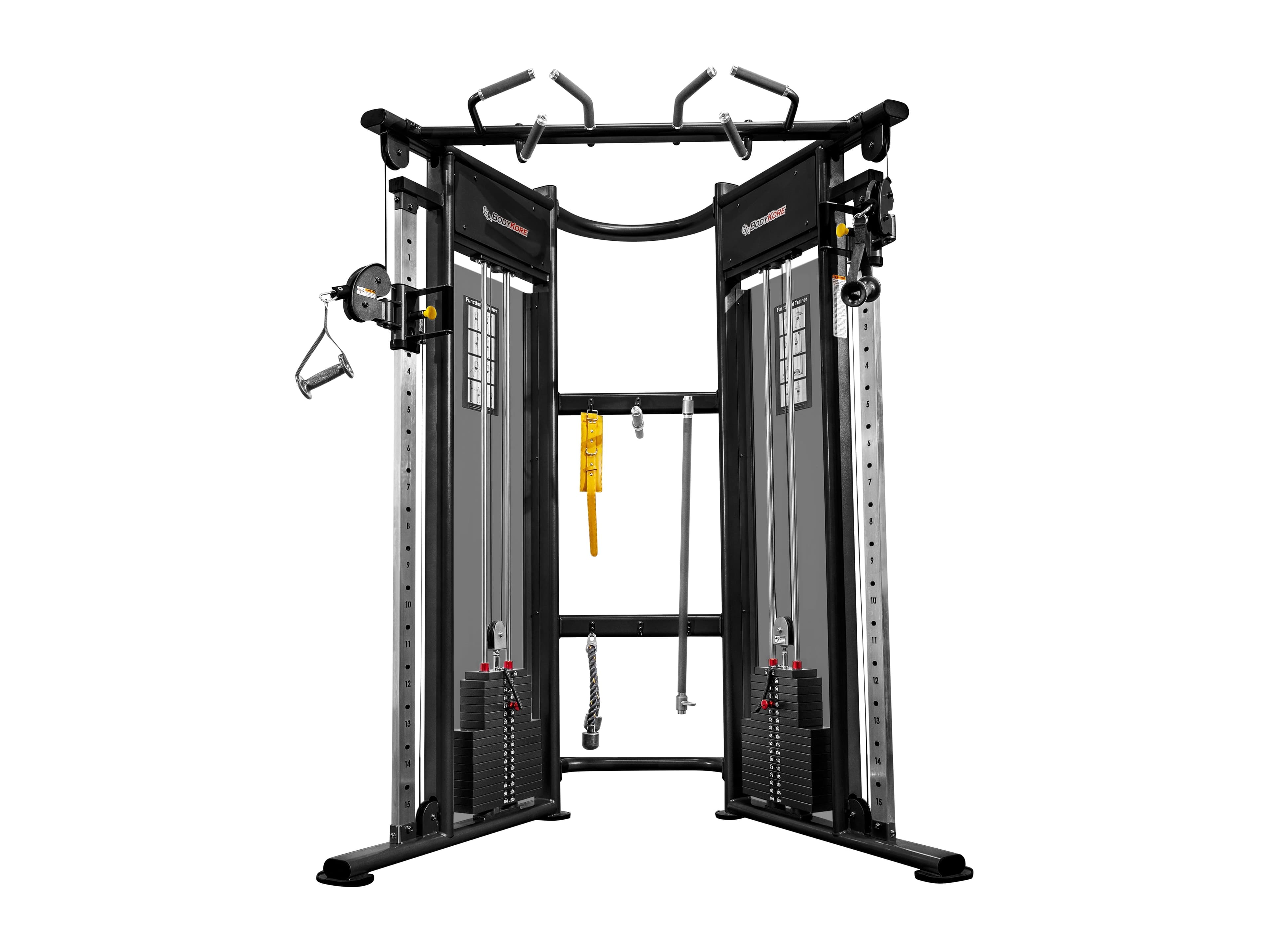
Single Pulley vs Dual Pulley Systems: Which Cable Setup Is Right for You?
Weight Stack vs Plate-Loaded Cable Machines: A Comparison
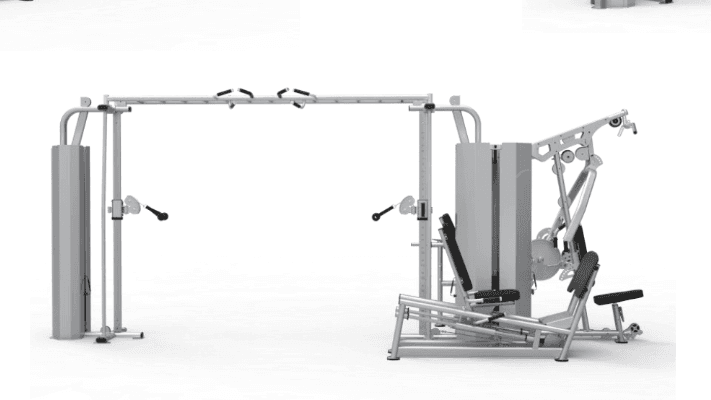
Cable Machines: The Complete Guide
Newsletter
Enter your email and be the first to get the latest blog posts, news, product launches and more from BodyKore.
Stay in the Know
Enter your email and be the first to get the latest blog posts, news, product launches and more from BodyKore.