

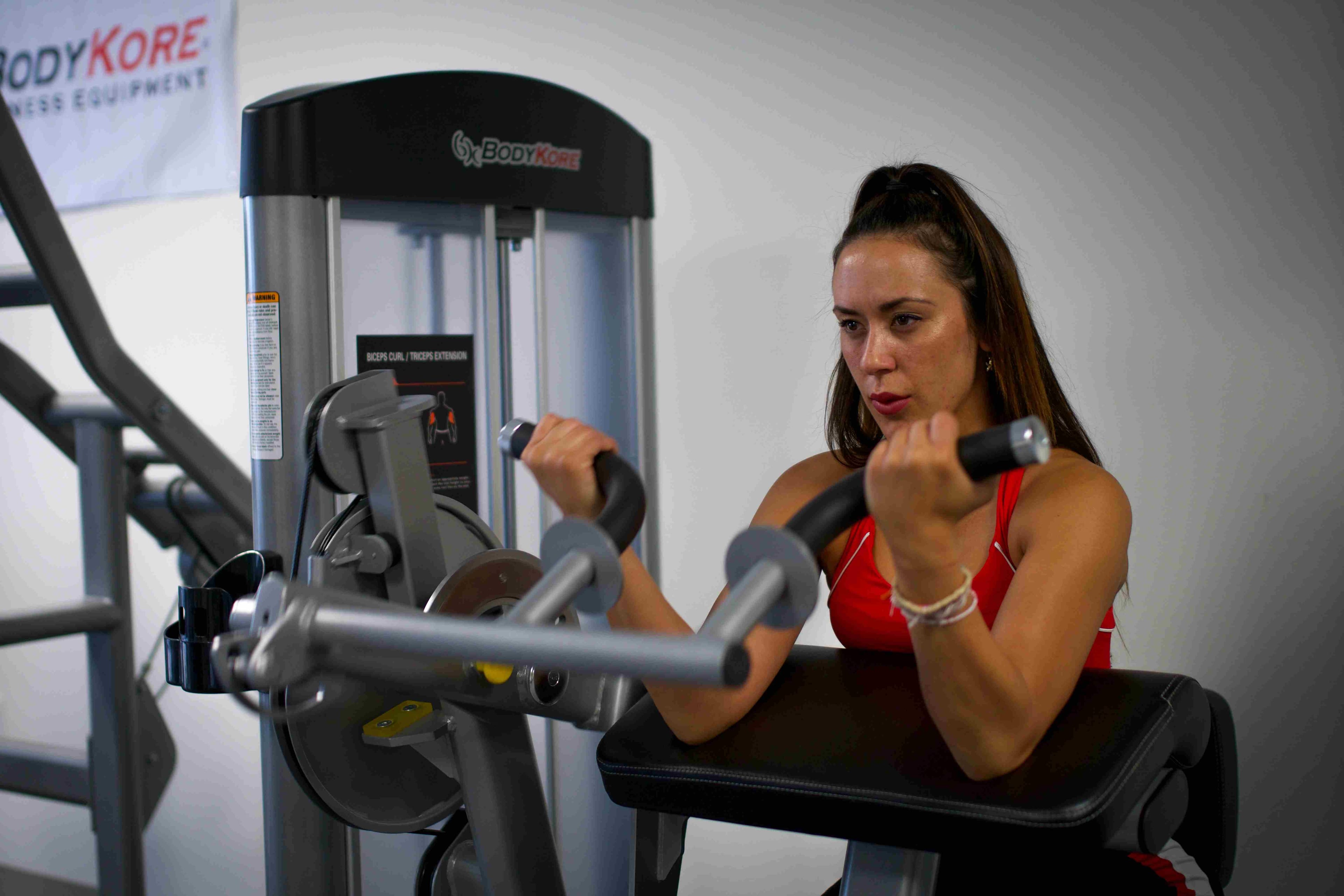
You remember that scene at the gym where everybody is doing curls before the mirror, attempting to build large biceps. The truth is that most coaches and trainers are already aware of the fact that, when you are seeking to gain bigger and stronger arms, you are probably just working the wrong muscle.
The issue of biceps vs triceps is not so black and white as many might believe, and to get an answer, we need to look into anatomy, physiology, and the requirements of your own fitness.
This article dissects it all, including the structure of the muscle, the most current information on volume and frequency of training, to enable you to make a better decision on where to target your training.
Understanding Arm Anatomy: Biceps vs Triceps
To decide which muscle to train, you must first understand what the muscles are, what they are composed of, and their functions.
The Biceps Brachii
The Biceps Brachii, also known as the biceps, is the muscle that sticks out on the front of your arm. The bi in the name is due to two heads:
The Long Head: It runs down the outside of the arm, on the supraglenoid tubercle of the shoulder blade (scapula). It is the head in charge of the peak of your bicep when you flex.
The Short Head: This head is formed by the coracoid process of the scapula, and is directed down the inside of the arm, becoming thickened as it descends. It connects the long head to create one tendon that inserts into the radius (forearm bone).
The primary movements of the biceps are: elbow flexion (bending at the elbow), forearm supination (rotating the forearm so the palm is facing up), and shoulder flexion (lifting the arm in front of you).
Biceps comprise only a third of the muscles of your upper arm, in spite of all their reputation. They are highly visible on the front, which makes them popular, but biceps are not always large.
The Triceps Brachii
The other is the triceps brachii, located at the back of the upper arm. The tri is of three heads:
The Long Head: The largest of the three heads, and is located at the infraglenoid tubercle of the scapula (shoulder blade). It is not only used in the extension of the elbow, but also in the extension and adduction of the shoulder.
The Lateral Head: It is a part of the triceps that develops at the back of the humerus (bone of the upper arm) and forms the lateral aspect of the triceps is the primary element of the extension power.
The Medial Head: This is the closest and commences in the humerus, but below the radial groove. It helps in balance and endurance in prolonged elbow activity.
The three heads join to form a tendon that inserts into the olecranon (the pointy part of the elbow). The triceps primarily extend the elbow (straighten the arm) and secondarily, provide stability and adduction to the shoulder (to move the arm down and behind the body).
Here's the rub: The triceps make up about 55% of the total muscle mass of the upper arm, while the biceps constitute about 30%. What's left is a mix of connective tissue and the brachialis, a deep flexor muscle under the biceps.
What Muscle Makes Your Arms Bigger?
This is the flesh of the bone. In a t-shirt, what area of your arm do you need to work on to make it appear bigger? It is the triceps, and it is not very likely.
The biggest muscle in the upper arm is the triceps, and when you work on training your biceps, you are actually training only one-third of the muscle mass of the upper arm. In other words, with the triceps being two-thirds of the pie, then training your biceps would give you one-third of a pie.
Triceps development provides the arm with fullness, thickness, and a horseshoe shape from rear and side-profile views. The biceps, while nicely visible from the front, do less for arm size than you might think.
But the biceps are not to be ignored. Bigger biceps add height and definition to your flexed arms, the "peak" that indicates muscle mass in photos and flexing poses. To have a full arm, full, no matter which direction you view it from, you need them both.
Which Muscle is More Important?
Aside from looks, both serve important functional purposes, especially in compound exercises.
Triceps and Pushing Strength
Triceps are essential to nearly all pressing exercises. During the bench press, overhead press, push-up, and dip, the triceps are the prime movers extending the weight at the end of each repetition. Indeed, if you've ever found yourself stuck at the top of the bench press, it's probably your triceps that are weak, not your pecs.
As a result, triceps training is critical not only for building arm size but also for upper body strength in general. A stronger triceps equals a stronger bench press, stronger push-ups, and greater stability when lifting something over your head.
Biceps and Pulling Strength
Biceps are strong in pulling exercises. They play a significant role in rows, pull-ups, chin-ups, and curls. Although compound upper-body pulling movements such as lat pulldowns and barbell rows do work the biceps as a synergist, they often do not provide enough stimulus for optimal bicep development (hence why curls are still so common).
The biceps are also important from a functional perspective, as they help lift groceries, open doors, hold a child, and perform any action that involves flexing the elbow.
Who Wins?
If it's about pushing, it's the triceps. The biceps are essential for pulling and functional abilities. If you want to train them both, you should, but if you had to choose just one for sheer strength output, the triceps would win out because they're used in more compound movements.
What Does the Research Actually Say?
Let's get into data. A handful of peer-reviewed studies have provided insight into how these muscles grow with training, and their findings can inform your training program.
Volume and Triceps Hypertrophy
A systematic review and meta-analysis (Frontiers in Physiology) examined seven studies of resistance training to understand the dose-response relationship between training volume (sets per week) and hypertrophy.
The takeaway message: No differences were found between moderate and high training volumes for biceps brachii hypertrophy, but high training volume (20+ sets per week) seemed to have a greater effect on triceps brachii muscle mass gains than moderate training volume.
So the triceps are more sensitive to high-volume training than the biceps.
To build the biggest triceps, it may be important to progressively increase your set volume over time, more so than for bicep growth, where moderate training volume hits diminishing returns.
Frequency and Arm Size
As reviewed by Menno Henselmans and published in exercise physiology journals, training a muscle 3-5 times per week leads to much greater muscle growth than training it 1-2 times per week (all other variables being equal).
In one study, for instance, a 3x-per-week full-body routine resulted in a much greater increase in bicep thickness than a split routine that trained biceps directly or indirectly only twice per week. This was also the case for the triceps, although the effect was not always statistically significant due to sample sizes.
The take-home message: it's all about frequency. So, while 15 sets per week for your arms is great, you're likely to get better muscle protein synthesis and muscle growth if you spread it out (e.g., 5-6 sets per session, three times per week).
Recommendations From the Evidence
With the above studies, here's what ideal programming should look like:
Biceps: 6-12 direct sets/week, with training frequency of at least 2 days. Indirect stimulus (exercise for the back, rows) increases total volume.
Triceps: 6-12+ direct sets per week, with studies indicating a higher volume (20 sets) provides additional benefit. Indirect triceps work (from pressing) contributes to volume.
Progression Based on Goals: What to Focus On?
There's no one answer; it depends on your goals. Here's a practical breakdown:
Goal: Maximum Arm Size
Prioritise triceps. Triceps are the bulk of the arm, so by focusing more on them (especially in compound exercises such as close-grip bench presses, dips, and overhead extensions), you will increase arm size more quickly. But keep a sufficient bicep volume.
Work it out: 60% triceps / 40% biceps direct volume.
Goal: Aesthetic Balance and Definition
Train both equally. Both muscles are needed to achieve impressive arms from all angles - relaxed, flexed, or contracted. Biceps make the front peak; triceps make the bulk and the horseshoe when viewed from the rear or the side.
Recommended split: 50/50, with a variety of exercises to target all heads of the muscles.
Goal: Strength in Compound Lifts
Emphasize triceps. If you care about how much weight you can bench press, overhead press, or the like, or your performance in push-dominant athletic events, your triceps strength will be limiting much more often than your biceps strength. Performing direct triceps exercises (skull crushers, cable pushdowns, close-grip bench pressing) will have the greatest impact.
Recommended split: 65% Triceps / 35% Biceps direct work.
Goal: Functional Fitness and Athletic Performance
Work both with context. Throwers, wrestlers, gymnasts, or climbers benefit from strong biceps to pull and support the elbow in a loaded position. Combat and football, or any pushing sport, would be better off with strong triceps. Most general fitness objectives can be achieved with balanced training.
The Best Exercises for Each Muscle
Muscle | Exercise | Focus |
Biceps | Barbell Curl | Mass building |
Incline Dumbbell Curl | Long head stretch | |
Preacher Curl | Isolation | |
Hammer Curl | Thickness | |
Chin-Up | Compound strength | |
Triceps | Close-Grip Bench Press | Mass building |
Weighted Dips | Compound strength | |
Overhead Extension | Long head focus | |
Skull Crushers | Isolation |
Common Arm Training Mistakes
Most people don’t struggle with arm growth because they lack effort, they struggle because they’re repeating the same training mistakes over and over
Mistake 1: Curls, Curls, Curls
Although curls are good, many people don't include pulling movements. Chin-ups and underhand barbell rows work the biceps through a greater, more functional range of motion (and a larger load) than curls.
Mistake 2: Not Training Triceps Overhead
Gymnasts tend to do pushdowns. Though they're beneficial, pushdowns don't heavily involve the long head of the triceps. To build a well-developed triceps, you need to include at least one form of overhead extension.
Mistake 3: Arm Day is Optional
Too many programs treat biceps and triceps as a "finisher" after a chest or back workout with little to no program design or progressive overload. Direct arm work with programming (progressive overload, various rep ranges, recovery) is superior.
Mistake 4: Neglecting Muscular Balance
Biceps and triceps are antagonists: they are opposites, and each muscle needs the other to work. Imbalances can stress joints, restrict movement, and lead to injury. Maintaining this relative strength will keep your elbows and shoulders healthy.
Building a Balanced Arm Program
Here's an example weekly schedule for someone looking to train the muscle groups effectively:
Day 1 - Pull Day (Back + Biceps)
Barbell Row: 4 x 8
Chin-Up: 3 x failure
Hammer Curl: 3 x 12
Incline Dumbbell Curl: 3 x 10
Day 2 - Push (Chest + Triceps)
Close-Grip Bench Press: 4 x 8
Weighted Dips: 3 x 10
Skull Crushers: 3 x 12
Overhead Cable Extension: 3 x 15
Day 3 - Arms Specialization (Optional)
Preacher Curl: 3 x 10
Barbell Curl: 3 x 8
Rope Pushdown: 3 x 15
Overhead Dumbbell Extension: 3 x 12
So each muscle group will be trained 2-3 times per week as described earlier in the training frequency literature.
Which to Train: Biceps or Triceps?
So, anatomy and science say it's this:
For size, it's the triceps; they're just the bigger muscle mass and contain more type II fibres, making them a better choice for high volumes of training.
If you want a well-rounded arm with peak and definition, they both must be worked, but the triceps are at least as important as the biceps, if not more.
The triceps are also stronger for functional and compound lifts. For pull strength and function, the biceps are crucial.
The truth is neither, it's both. The biggest arms are found on people who work both muscles deliberately, consistently, and progressively. Don't neglect your triceps, and don't preach curls for larger arms.
Train smart. Train both. And let the science guide your programming.
Trending Now
Single Pulley vs Dual Pulley Systems: Which Cable Setup Is Right for You?
Weight Stack vs Plate-Loaded Cable Machines: A Comparison
Cable Machines: The Complete Guide
Newsletter
Enter your email and be the first to get the latest blog posts, news, product launches and more from BodyKore.
Stay in the Know
Enter your email and be the first to get the latest blog posts, news, product launches and more from BodyKore.