

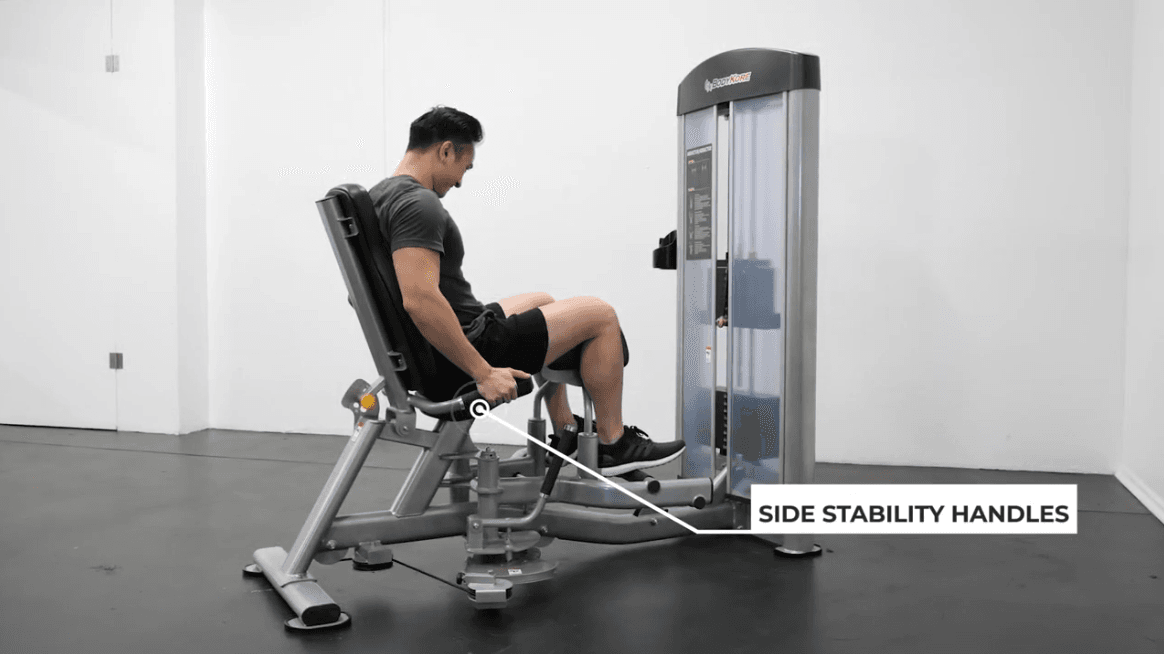
Wondering in the gym, have you noticed that wide-seated machines with the padded legs are all about? You are looking at one of the most underestimated tools for developing glutes, the hip abduction machine. Be it the desire for a rounder, fuller backside, better athletic performance, or to safeguard your knees and hips against injury, this machine can be permanently incorporated into your lower-body training program.
The hip abduction machine specifically isolates the gluteus medius and gluteus minimus, two muscles that are often overlooked in favor of the more glamorous gluteus maximus. The thing is, though, that without a strong glute med and glute min, you will never have a good overall glute shape, hip stability, and quality of motion. The unsung heroes that provide your hips with the lifted, rounded look when viewed from the side are these smaller glute muscles.
You will learn how to use the hip abduction machine in the best form, how the machine works in the science behind getting the glutes to work, the most common mistakes to avoid, and how to program the machine to promote increased muscle growth, whether you are a complete beginner or an experienced gym-goer.
What Is the Hip Abduction Machine?
The hip abduction machine is a seated gym machine that trains the muscles that control the movement of your legs away from the center of your body, a movement known as hip abduction. It is normally equipped with a padded seat, backrest, and two leg pads that push against the outer thighs. You sit, put your legs in or out of the pads, depending on the type of machine, and press, pushing outwards against resistance.
This should not be confused with the hip adduction machine. It does just the reverse, that is, bringing your legs inwards towards the midline. Both machines appear similar and target completely different muscle groups.
The major muscles that the hip abduction machine focuses on are:
The muscle on the outer hip (gluteus medius) is a fan-shaped muscle on the outer hip that provides the hip with lateral stability and hip abduction.
The gluteus minimus lies beneath the gluteus medius and helps with abduction and internal rotation.
The tensor fasciae latae (TFL) is a secondary stabilizer that moves with the outer thigh and assists in its movement.
All these muscles help stabilize the hips, maintain balance during single-leg activities, ensure proper knee tracking, and create the desirable lateral glute fullness that makes your backside look rounder and more sculpted in every pose.
Advantages of the Hip Abduction Machine.
You may be asking yourself: Why go through this machine when you are already doing squats and hip thrusts? The reason it deserves its spot in all serious glute programs is due to:
Enhances hip stability and balance: Robust glute medius muscles help athletes and everyday movers to avoid dropping the hips when walking, running and lunging, which is vital.
Grows rounder, fuller glutes: The gluteus medius lies on the upper outer part of the glute, and its development gives your backside a noticeable width and roundness that squats alone cannot achieve.
Knee alignment, injury prevention: Weak hip abductors are associated with knee valgus (knees caving inward), which can lead to pain and injury over time. Hip abduction training is a direct response to this weakness.
Easy to use and low risk of injury: The machine is user-friendly with a guided range of movement. It is also safe and accessible to people of all fitness levels, including those recovering from an injury.
Good mind-muscle response: The isolation nature of the exercise helps you consciously connect with and activate your glutes, enhancing neural drive and long-term muscle development.
EMG analysis was used in a 2020 study in the Journal of Strength and Conditioning Research to compare gluteus medius activation during exercises. The seated hip abduction machine was found to be as active as, or more active than, movements such as lateral band walks and clamshells.
The research indicates that a small forward incline and slow pace are far more effective at recruiting muscle, and thus the machine has been found to be effective in muscle growth as well as rehabilitation.
Hip Abduction Machine: How it works (Step-by-Step Guide)
The way your glutes are set up and executed is the difference between really working your glutes and just going through the motions with your glutes. These steps should be followed to the letter so as to achieve the best outcome.
Step 1 - Get the machine ready for your body
Always take 30 seconds to adjust the machine before loading any weight. Seat Check: Sit in the seat and make sure your hips are at about 90 degrees. When you are sinking low or sitting high, readjust the seat height. The leg pads are then raised on the outer area of your knees or even higher on your lower thighs. When they are either lying too high on your hips or too far down towards your ankles, you will not get the leverage you require to work the right muscles.
Adjust the initial width so that your legs are close together, or simply set it to half the hip width. In some machines, you can modify this; in others, not. In any case, you want to have your legs in a fairly neutral position to have all the range of motion possible on each repetition.
Step 2 - Take up the appropriate starting position
This is the form cue that causes the largest difference, and most people will never hear it: do not sit all the way back into the seat. Rather bend a little on the hips, that is, about ten or twenty degrees, so that your trunk leans a little forward, instead of lying quite upright against the backrest.
This forward lean puts the gluteus medius in a mechanically advantageous position for the movement. When you sit straight up or even worse, lean back, then the TFL comes in, and the glutes come second. The difference between a glute exercise and a hip flexor exercise is known as the forward lean.
When you are in position, lightly engage your core, press your feet equally into the footrests, and place your hands on the handles or on your thighs. Breathe and be ready to move with purpose.
Step 3 - Perform the movement in a controlled manner
Pull out both legs using the pads, slowly and in a controlled manner. Consider starting the movement with the outer hip rather than your feet or knees. Use until you reach the widest point the machine allows, or until you experience a distinct, powerful contraction of the outer glutes, then maintain that position for at least one full second.
It is during that pause at maximum contraction that a large part of the muscular stimulus occurs, and most people just pass over that pause at maximum contraction.
Starting there, pull your legs back to the starting position in two or three seconds. Do not allow them to hang together. Be sure the weight stack does not clank down, maintain tension throughout the movement, and do not allow your legs to meet at the bottom. Keep a bit of tension at all times.
Step 4 - Breathe to the motion
Breathing: As you proceed with the working portion of the rep, inhale as you push your legs outward and exhale as you draw them back in. Find this rhythm in your initial rep and maintain it throughout the set. Correct breathing keeps your core from over-bracing and helps you maintain a steady, controlled tempo throughout all your reps.
Proper Form Tips for Maximum Glute Activation
The distinction between a mediocre set and a glute-burning set can sometimes be reduced to just a few little but strong form cues:
Lean forward slightly: A 10-20° forward hinge at the hips is enough to place the glute medius in the ideal position for optimal activation. It is the most efficient form tip for this machine.
Do not work with momentum: One rep must start with a complete stop. Swinging or bouncing will shorten the period of tension and transfer the load to the joints rather than the muscles.
Control the eccentric cycle: The reverse of pushing away (legs returning to each other) is as important as the push-out. Reduce the speed to 2-3 seconds to achieve better muscle stimulus.
Always maintain tension: Do not ever let the legs bang against one another. Maintain the stack of weights a little higher at the base of the individual reps.
Do not drop the weights: Banging the weight stack on the bottom indicates a lack of control and may stress the machine and your joints. Lower with intention.
Common Mistakes to Avoid
These mistakes occur on the hip abduction machine even for experienced gym-goers. To save yourself and get the best outcomes, avoid them:
Excessive weight: Heavy weight on this machine nearly always results in compensatory movements, back arching, and dominance of TFL over glutes. There is no ego here; control reigns.
Excessive leaning back: Reclining the seat back shifts the focus to secondary muscles rather than the glute medius. Note: lean forward, not backward.
Making a fast time on reps: Speed kills glute activation. When you do reps in less time than a 3-second beat, you are working with momentum rather than muscle.
Partial range of motion: Not pushing all the way out cheats your glutes out of their full range. Push to the point where you experience a deep squeeze, then hold.
Not doing glutes prior to initiating: Take a moment before each set to consciously squeeze and feel your glutes. This cognitive stimulation enhances neuromuscular recruitment of rep one.
Best Rep Range and Sets for Glute Growth
The hip abduction machine is most responsive to moderate to high rep ranges, with a focus on time under tension. The following are the programming suggestions according to level of experience:
Novices: 2 to 3 groups of 12 to 15 repetitions with a weight that is challenging yet maintains impeccable form. Pay attention to mastering the movement pattern and experiencing the glutes in action.
Intermediate: 3-4 sets of 10-15 reps with a gradual increase in overload with time. Start adding pauses at the peak contraction, lasting 1-2 seconds.
Advanced: 4 or more sets using techniques like drop sets, stopped reps, and slower tempo variations. Brutal muscle fatigue: 3 seconds out, 1 second hold, 3 seconds back, 3-1-3 tempo.
Whatever your level, maintain a controlled tempo. Every effective glute development on this machine is based on the rep cadence of 2 seconds out, 1 second rest, and 2 to 3 seconds back. Keep sets spaced between 60 and 90 seconds apart to maintain muscle tension without complete recovery.
Types of Hip Abduction Machines to Try
When the standard movement has become natural, these variations may introduce variety, a new stimulus to the same pattern.
The lean-forward variation
This is merely an exaggeration of the forward hinge explained in the form section, bending twenty to thirty degrees forward instead of ten to twenty. The stronger forward incline gives the glute medius activation a significant boost and is among the most effective things you can do, provided you have been doing the standard version long enough and want to add intensity without adding weight.
Single-leg abduction
Other machines can be used, working on one leg at a time. You support one leg and push only with the other against the pad. This unilateral technique exposes and addresses strength imbalances between the two sides and is useful for athletes or anyone who has experienced injury to one hip more than the other.
Adding a resistance band
A resistance band around your thighs, just above the knees, when using the machine, is one of the accommodating resistances added to the machine's resistance. It keeps you active throughout the movement and introduces another aspect of tension that complements the machine's resistance profile.
Sample Glute Workout with Hip Abduction
The following is an evidence-based, comprehensive glute workout that incorporates the use of the hip abduction machine in a strategic way:
Barbell back squats or goblet squats: 4sets 8-10 reps (compound strength builder, mostly glute maximus and quads)
Barbell or dumbbell hip thrusts: 4 sets of 10 to 12 reps (maximum glute maximus contractions, the king of glute exercises)
Reverse lunges or Bulgarian split squats: 3 sets of 10-12 reps each leg (unilateral strength, coordination, and glute development)
Hip abduction machine 3 to 4 sets 12 to 15 reps (finisher; isolates glute medius to achieve lateral fullness and hip stability)
Rest 90 s between sets of compounds and 60 s between sets of isolation. Session time: about 45-60 minutes. This design works to make sure that your glutes are trained in all directions, front, back, and side, to be fully developed.
Who Should Use the Hip Abduction Machine?
The beauty of this machine is its wide applicability. It is really helpful to nearly everybody:
Novices: It is a secure and convenient entry-level into the world of strength training, which is all new to beginners. It trains the correct hip-abduction mechanics without the demands of complex techniques.
People who have suffered injuries: Physical therapists often recommend hip abduction exercises for injuries to the knee, hip, or lower back. The machine offers a controlled, low-impact rehabilitation environment.
Athletes who require hip stability: Runners, cyclists, soccer players, basketball players, and any other athlete who relies on the need to move the hips laterally and also to have one leg stable.
Anybody who needs more glute development: If you need a more rounded, lifted, and aesthetically complete backside, the hip abduction machine will fill in the gaps left by squats and hip thrusts.
Conclusion
The hip abduction machine is much more than a mere gym machine; it is a specialized, science-based machine designed to develop stronger, more stable glutes. Training the ignored gluteus medius and minimus, you unlock lateral glute fullness that can only be achieved through compound exercise on its own.
Three elements of proper form, deliberate tempo, and consistent programming are the key to getting results. Lean slightly forward, count every rep, rest on maximum contraction, and pick a weight that challenges you without compromising your technique. And do this habitually, and you will see and feel the difference in your glutes, posture, athletic performance, and injury resilience.
Trending Now
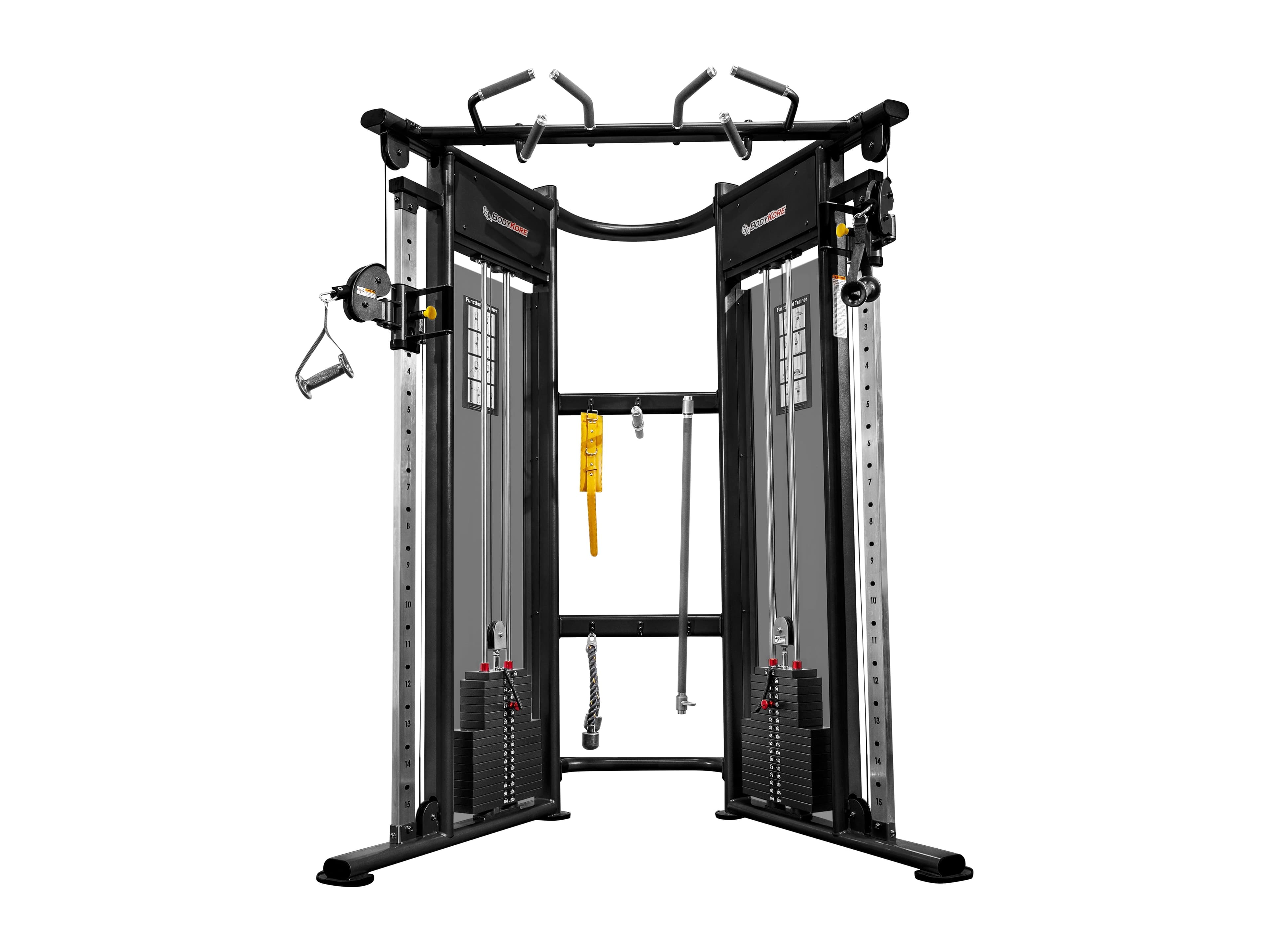
Single Pulley vs Dual Pulley Systems: Which Cable Setup Is Right for You?
Weight Stack vs Plate-Loaded Cable Machines: A Comparison
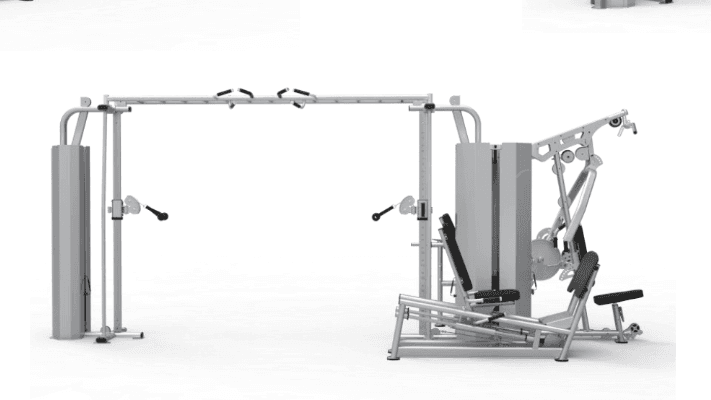
Cable Machines: The Complete Guide
Newsletter
Enter your email and be the first to get the latest blog posts, news, product launches and more from BodyKore.
Stay in the Know
Enter your email and be the first to get the latest blog posts, news, product launches and more from BodyKore.