

The Quick Rundown
Stopping exercise often removes hidden calorie compensation — the extra food and reduced daily movement that quietly offset your gym sessions.
When you exercise regularly, your body stores more glycogen (and the water bound to it), adding 2 to 4 pounds of scale weight that disappears when you stop.
Intense or chronic exercise elevates cortisol, a stress hormone that promotes water retention and fat storage, particularly around the abdomen.
NEAT (non-exercise activity thermogenesis) — the calories burned through everyday movement — often drops when you start a structured exercise program, and recovers when you stop.
The Constrained Energy Model suggests the body actively caps total daily energy expenditure, meaning added exercise doesn't always produce a proportional calorie deficit.
None of this means exercise is bad for weight management. It means most people underestimate how much they eat in response to it.
Understanding the mechanism helps you use exercise and diet together far more intelligently.
The Question Nobody Expects to Be Asking
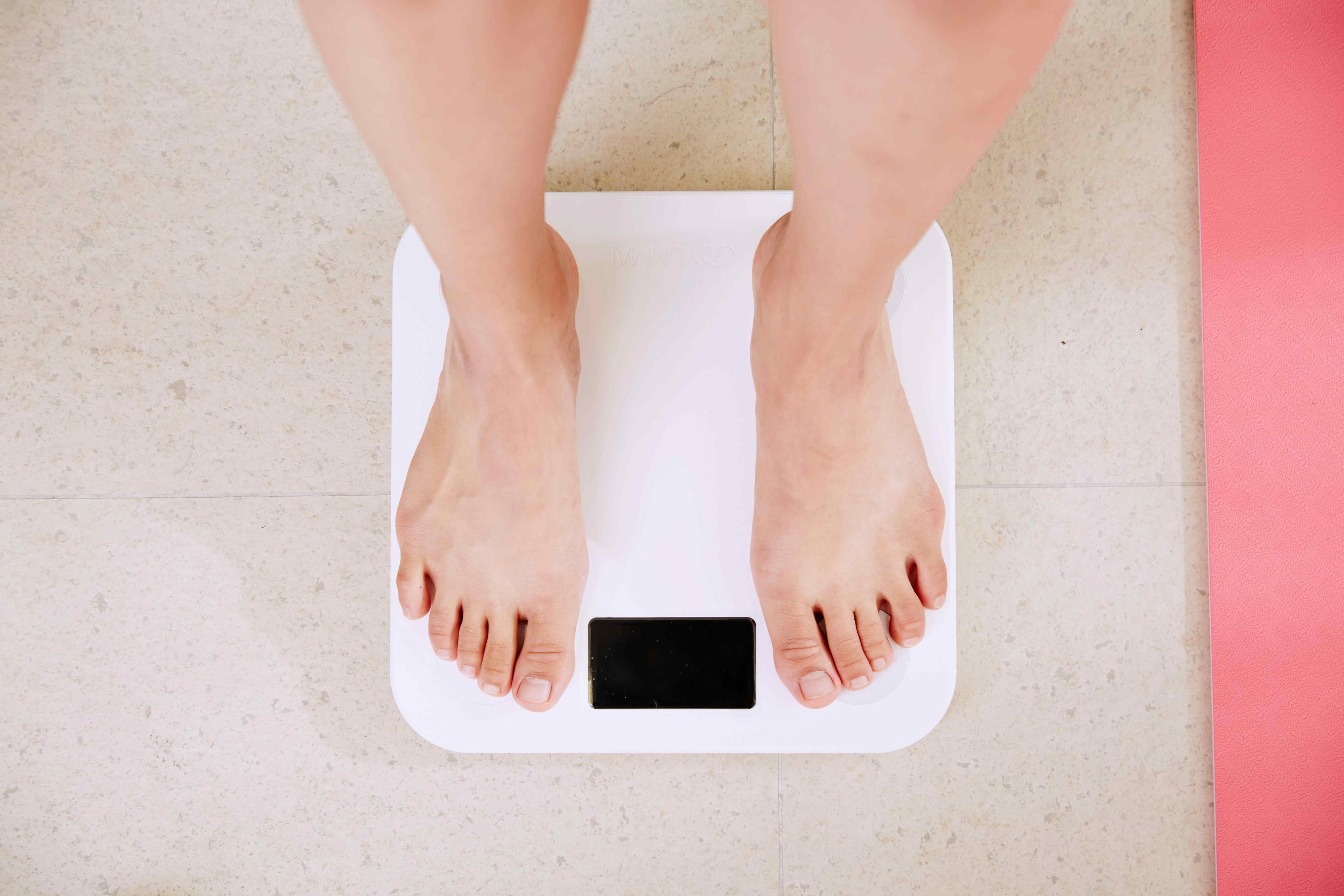
You spend weeks in the gym. You're sweating, sore, logging sessions. Then something happens — an injury, a busy period, a holiday — and you stop. A week or two later, you step on the scale and notice the number has gone down.
That makes no sense. Except it does, once you understand what was happening the whole time you were working out.
This isn't a fringe experience. Plenty of people notice this pattern, and the fact that it surprises them says more about the fitness industry's oversimplifications than it does about biology. Exercise is genuinely good for you. But as a weight loss tool, it's far more complicated than "burn calories, lose fat." A growing body of research has been making this uncomfortable point for years.
Here's what's actually going on.
Reason 1: You Were Eating More Than You Realized
This is the most common culprit, and the one most people resist accepting.
Exercise increases appetite. Not dramatically, and not in every person, but the research is consistent: people who exercise regularly tend to consume more calories than they did before they started, often without knowing it. A 2023 study tracking participants over 28 days found that people ate larger meals after exercise compared to non-exercise days. The effect was more pronounced in naturalistic settings than in lab conditions, suggesting real-world compensation runs higher than controlled studies typically catch.
This compensation takes two forms: intentional and unconscious.
Intentional compensation is the "I earned this" mindset. You run for 45 minutes, burn around 400 calories, and later that day reward yourself with a slightly larger portion, a snack you might have skipped, or a higher-calorie drink. Most people underestimate how quickly food offsets exercise. A standard 45-minute moderate run burns roughly what's in a medium latte and a muffin — and many exercisers consume both.
Unconscious compensation is subtler and harder to catch. One study had participants exercise until they burned exactly 120 calories, then falsely told half of them they had burned 265 calories and the other half 50 calories. The group who believed they burned more calories subsequently ate significantly more in a taste test. Perception of effort shapes eating behavior independent of what actually happened metabolically.
When you stop exercising, this compensation disappears. You're no longer coming home from a workout with elevated hunger. You're no longer mentally "rewarding" yourself for a hard session. Your appetite settles back to a more stable baseline, and without realizing it, your actual daily calorie intake drops. The scale follows.
Reason 2: Glycogen and Water Weight
Exercise builds up glycogen stores in your muscles. Glycogen is how the body stores glucose for quick energy during physical activity, and it sits primarily in muscle tissue and the liver. Here's the part most people don't know: each gram of glycogen binds to roughly 3 to 4 grams of water.
When you train consistently, your body keeps glycogen stores topped up and ready. A well-trained person can hold somewhere between 400 and 600 grams of glycogen in their muscles. Attached to that is anywhere from 1,200 to 2,400 grams of water — call it 2 to 5 pounds of scale weight that simply lives in your muscles as long as you're training regularly.
Stop training, and glycogen stores gradually deplete as you're no longer burning through them and replenishing them. The water bound to that glycogen releases with it. The result is a drop in scale weight that has nothing to do with body fat.
This also explains why people gain weight when they first start exercising. A common complaint from beginners is that the scale goes up after the first few weeks of a new program. Cleveland Clinic notes that glycogen binding with water during early exercise adaptation typically adds 1 to 3 pounds of initial water weight. It reverses when you stop, which reads as weight loss on the scale.
Important caveat: this is not fat loss. You're not losing stored body fat when this water weight drops. The measurement changes, but your body composition hasn't shifted in any meaningful way. For practical purposes, though, the scale doesn't distinguish between fat and water.
Reason 3: NEAT Was Suppressed While You Exercised
NEAT stands for non-exercise activity thermogenesis. It covers every calorie you burn outside of structured exercise: walking around, fidgeting, taking the stairs, doing chores, shifting in your seat. It sounds minor, but it accounts for a surprisingly large portion of total daily energy expenditure — anywhere from 6 to 50 percent depending on the individual, according to research published in the Journal of Physiology.
Here's the problem with exercise that almost nobody talks about: vigorous workouts suppress NEAT.
After an intense gym session, you're tired. You take the elevator instead of the stairs. You sit at your desk for longer. You skip the walk after dinner because your legs are spent. You fidget less. Each of these reductions is individually small, but they stack. Research from the National Institutes of Health found that non-exercise activity thermogenesis dropped by 150 calories per day — a 27 percent reduction from baseline — in individuals undergoing caloric restriction. A separate study showed that vigorous exercise decreases subsequent non-exercise physical activity in ways that can meaningfully offset the calories burned during the workout itself.
The body is protecting its energy reserves. You push it hard in one direction, it compensates in another direction.
When you stop exercising, this suppression lifts. You're no longer exhausted from training. You move more freely throughout the day without realizing it. You take the stairs. You pace during phone calls. You stand when you'd otherwise sit. Your NEAT climbs back toward its natural level, and the net calorie burn across a full day can actually increase.
This is one reason why long, exhausting cardio sessions often produce less weight loss than their calorie estimates suggest: the 500 calories burned in an hour-long run may come partly at the expense of 200 to 300 fewer calories burned in the remaining 23 hours of the day.
Reason 4: Cortisol Was Keeping You Inflamed and Retaining Water
Exercise is a physical stress. That's the whole point — you stress the body and it adapts. But physical stress triggers cortisol, the same hormone associated with psychological stress, and cortisol has direct effects on weight and water retention.
Moderate exercise produces healthy, short-term cortisol spikes that resolve quickly. High-intensity or high-volume training — the kind many people push themselves into when they're trying to lose weight fast — can keep cortisol elevated for extended periods. Chronically elevated cortisol causes the body to retain sodium, which leads to water retention. It also promotes fat storage, particularly visceral fat around the abdomen.
This doesn't mean exercise causes fat gain. But it does mean that the scale during a period of intense training can look heavier than it actually is due to cortisol-driven water retention and inflammation. Sore muscles after a workout are partly inflamed tissue, and that inflammation carries water weight.
When you stop exercising, cortisol drops. The inflammation subsides. Water retention eases. The scale reflects a lower number that was always closer to your true weight — it was just masked by the physiological response to training stress.
People who overtrain are especially prone to this effect. If you were running six days a week, hitting intense classes every day, or training through constant fatigue, stopping that regimen can produce a notable drop in scale weight within a week or two as cortisol and inflammation normalize.
Reason 5: The Body Was Compensating in Ways You Never Saw
This is where the science gets genuinely interesting — and where it challenges what most fitness advice assumes.
In 2016, anthropologist Herman Pontzer and his team published research that complicated the conventional "burn more, lose more" model. They studied the Hadza, a hunter-gatherer population in Tanzania who walk miles daily as part of their traditional lifestyle. The expectation was that their high activity level would produce a significantly higher total daily energy expenditure than sedentary Western adults. It didn't. The Hadza burned only marginally more calories per day than the average American desk worker.
This led to the Constrained Energy Model: the idea that the body regulates total daily energy expenditure within a relatively narrow range regardless of activity level. When you exercise, the body compensates by quietly downregulating energy spent elsewhere — reducing resting metabolic activity, trimming immune function, dampening the stress response — to keep total expenditure from climbing as high as the exercise alone would suggest.
A 2024 study in iScience supporting this model found that approximately half of sedentary people who began a 24-week aerobic exercise program showed measurable energy compensation — meaning their bodies offset a portion of the calories burned during exercise through physiological adjustments elsewhere.
The implication: exercise burns fewer net calories than it appears to, because the body partially absorbs the increase by cutting expenditure in other systems. When you stop exercising, those systems resume their normal activity. Total energy expenditure doesn't drop as much as you'd expect from losing the exercise sessions, because those compensatory reductions reverse.
This is not an argument against exercise. Pontzer himself is careful to emphasize that the health benefits of exercise go far beyond weight — cardiovascular function, metabolic health, cognitive function, mood, bone density. The constrained model explains why exercise alone is a poor weight loss strategy, not why exercise is bad.
Reason 6: You May Have Been Experiencing a Plateau Without Knowing It
There's a simpler possibility worth considering. If you were exercising and not losing weight — or even slowly gaining — and then lost weight after stopping, you may have already been at a plateau during the exercise period.
Weight loss plateaus happen when the body adapts to a reduced calorie intake or increased exercise load. Metabolic rate adjusts downward, hormone levels shift, and weight stabilizes even when you're working hard. The plateau isn't permanent, but it can persist for weeks or months.
Stopping exercise removes the physiological stress of the plateau. Appetite normalizes, cortisol drops, water retention decreases, and the scale begins to move again. None of that means exercise was causing the stall — it may simply have been the environment in which a plateau developed, and removing that environment changed the picture.
What This Actually Means for Your Goals
None of this is an argument to stop exercising. Far from it. What it is, though, is a reason to rethink how exercise and weight loss relate to each other.
Exercise is not a reliable primary driver of fat loss. Research consistently shows that diet drives weight loss and exercise supports it. A 2012 analysis found that exercise alone, without dietary changes, produced significantly less weight loss than diet alone. The two work best together, but if you had to pick one lever to pull, the kitchen beats the gym every time.
Eating in response to exercise is the primary reason it underperforms. The calorie math on exercise looks good on paper. It rarely plays out that cleanly in practice because appetite adjusts. Tracking food intake is an uncomfortable but effective way to see whether this is happening to you.
NEAT matters more than most people give it credit for. Walking more throughout the day, taking the stairs, standing at your desk, pacing during calls — none of this feels like exercise, but cumulatively it can burn more calories than a 45-minute gym session, without the hunger response that intense training triggers.
Longer, lower-intensity activity may outperform short, intense sessions for weight management. High-intensity exercise triggers more compensation in both appetite and NEAT suppression. Moderate-intensity movement — walking, light cycling, swimming at a comfortable pace — produces less compensatory eating and less NEAT reduction, which means more of those calories stay as a net deficit.
If you stop exercising and lose weight, don't take that as permission to stay inactive. The weight you lose is likely some combination of water, reduced inflammation, and reduced food intake. You're not burning fat more effectively without exercise. You're just removing a stimulus that was driving compensatory behaviors. The long-term consequences of detraining — loss of muscle mass, declining cardiovascular health, reduced insulin sensitivity — are not worth the scale drop.
How to Exercise Without Triggering Compensation
You can reduce the compensation effect with a few practical adjustments.
Track your food, especially on training days. Most people genuinely don't know how much they're eating in response to exercise. A week or two of honest tracking reveals whether the compensation is happening and by how much.
Prioritize protein. High protein intake suppresses appetite more effectively than carbohydrates or fat, and it helps maintain muscle during periods of moderate calorie restriction. Aim for 1.4 to 1.7 grams per kilogram of body weight on training days.
Choose exercise you find enjoyable rather than punishing. One reason NEAT drops after intense exercise is simple fatigue. People who dread their workouts tend to park closer, sit more, and move less for the rest of the day. People who enjoy their training tend to stay generally more active.
Walk more on rest days. Walking is NEAT in action. A 30-minute walk burns roughly 150 calories without triggering meaningful appetite compensation or NEAT suppression. Over a week, those walks add up to more than most people's gym-driven calorie deficit.
Don't use exercise as a license to eat. The "I worked out today so I can eat this" mindset is responsible for more stalled weight loss efforts than most people want to admit. Treat food choices and training as two separate decisions, each made on their own merits.
The Bottom Line
Losing weight when you stop exercising isn't a paradox. It's the predictable result of removing several hidden compensatory effects that were quietly working against your deficit the whole time you were training.
The glycogen and bound water leave with the training. Cortisol and inflammation settle down. NEAT recovers. Compensatory eating stops. The scale drops — not because your body has gotten better at burning fat, but because several forces that were pushing the number up have been removed.
Understanding this doesn't mean you should stop exercising. It means you should exercise with realistic expectations and stop treating the gym as an excuse for the kitchen. Weight management lives mostly in what you eat. Exercise shapes how your body looks, how it functions, and how long it lasts. Those are not small things. They're worth training for, independent of what the scale says.
Trending Now
Single Pulley vs Dual Pulley Systems: Which Cable Setup Is Right for You?
Weight Stack vs Plate-Loaded Cable Machines: A Comparison
Cable Machines: The Complete Guide
Newsletter
Enter your email and be the first to get the latest blog posts, news, product launches and more from BodyKore.
Stay in the Know
Enter your email and be the first to get the latest blog posts, news, product launches and more from BodyKore.